Is Kensington the Right Alternative to the Berkeley Hills?
June 25, 2026
June 25, 2026
If you love the Berkeley Hills but feel unsure about the steep roads, hillside logistics, or day-to-day convenience, Kensington is worth a serious look. Both places offer character, quiet streets, and a strong sense of place, but they live very differently. If you are trying to decide whether Kensington gives you enough of what you love about the hills without some of the friction, this guide will help you compare the feel, layout, and tradeoffs in a practical way. Let’s dive in.
Kensington in San Diego dates its subdivision to 1910, and the City describes it as a neighborhood shaped by steep slopes, open space, curving streets, and a compact Adams Avenue commercial spine. That combination gives it a village-like feel that stands out right away. You get topography and charm, but also a clearer neighborhood center.
That is one of the biggest differences from the Berkeley Hills. In Berkeley, many hill streets are steep, narrow, and curving, and some areas rely on paths and stairs because sidewalks are narrow or missing. Both areas are shaped by terrain, but Kensington tends to feel more self-contained and easier to read day to day.
If you are comparing these two places, the real question is often not city versus suburb. It is what kind of quiet you want. Kensington feels more like a small neighborhood with a defined center, while the Berkeley Hills often feel more terrain-first, scenic, and residential.
In practical terms, that can shape how you experience the block you live on. Kensington offers curving streets and hillside character, but the neighborhood pattern still connects back to a compact commercial core. In the Berkeley Hills, the topography often takes the lead, which can create a more tucked-away, view-oriented setting.
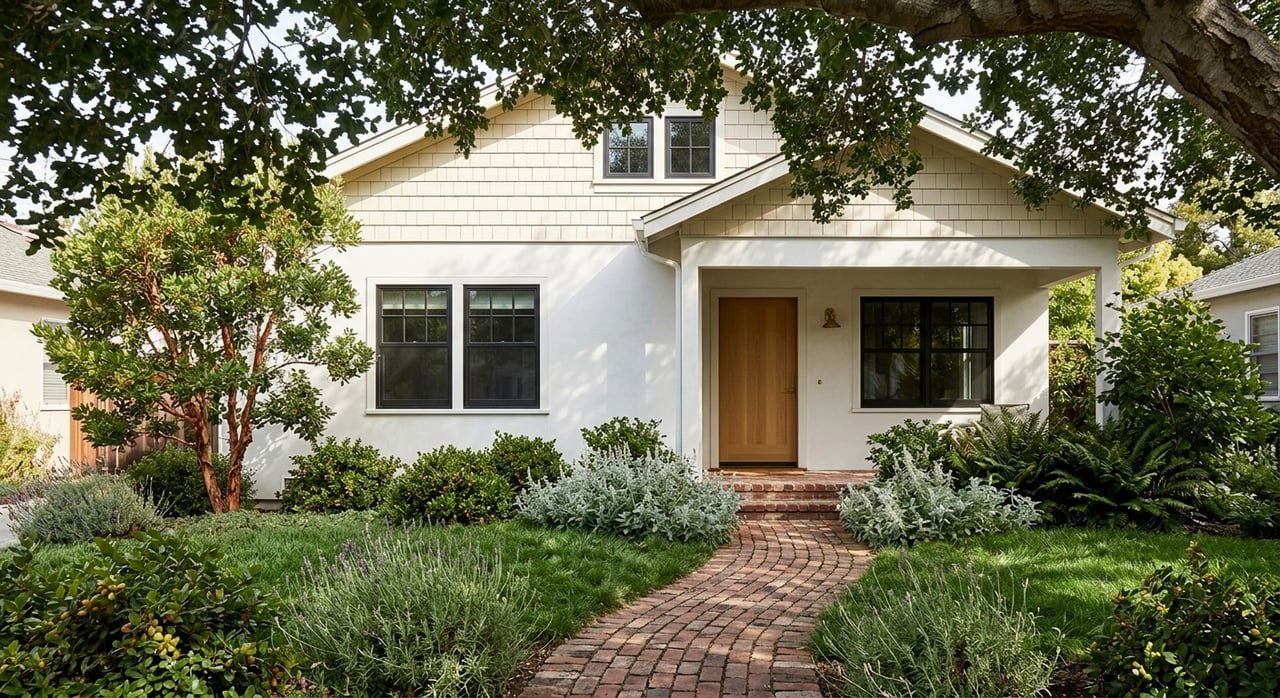
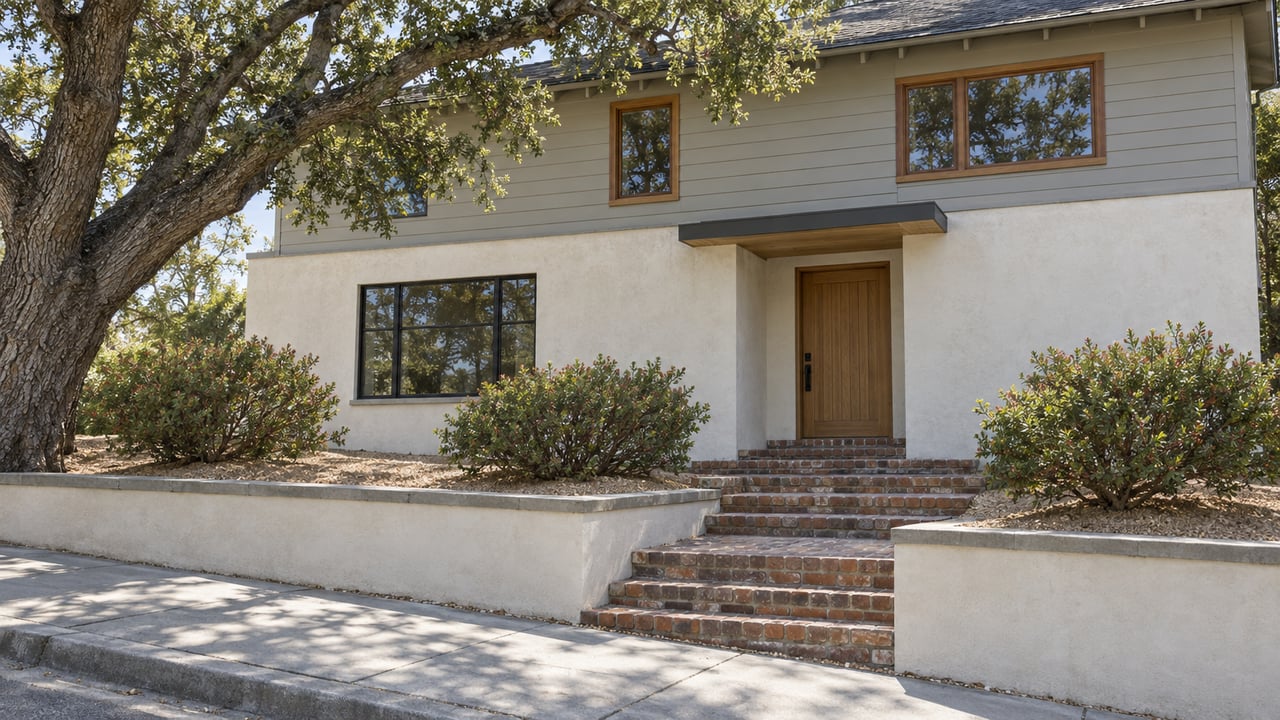
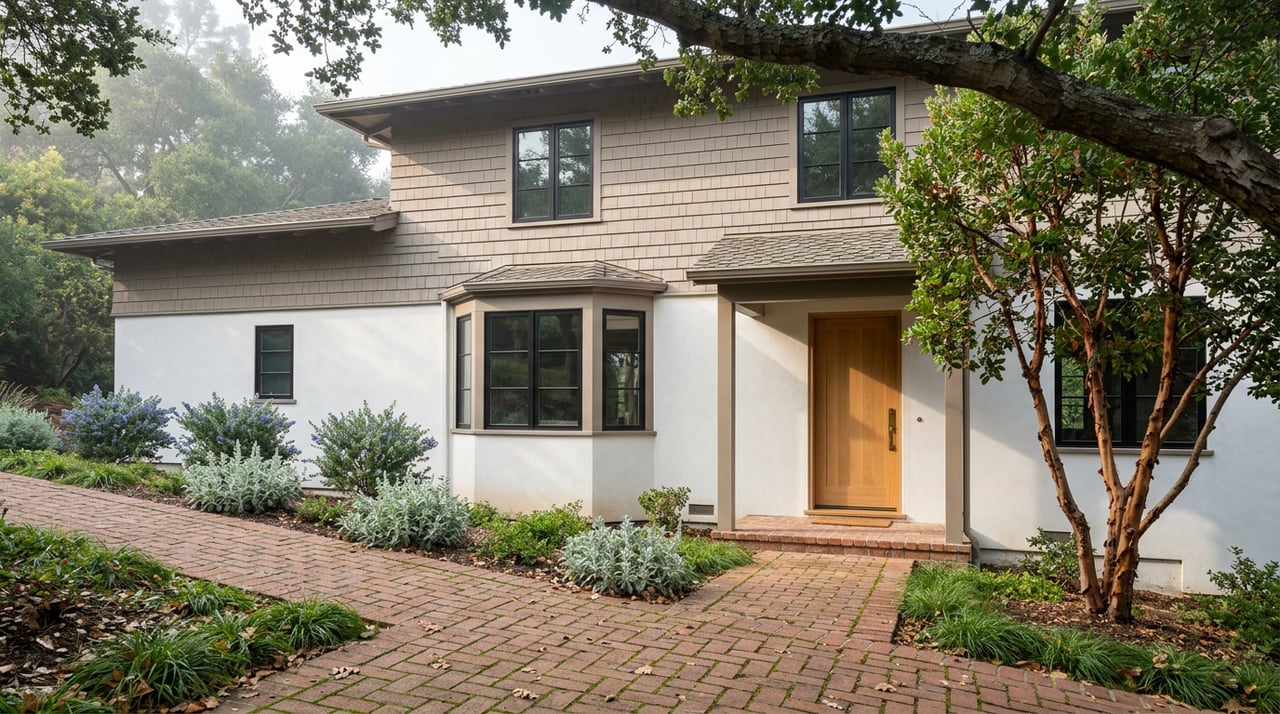
Kensington has a strong historic identity. City survey work identifies Kensington and Talmadge among potential historic districts in the Greater Mid-City survey area, and Mid-City historic-context materials reference early bungalow and Craftsman-era housing patterns.
For buyers who love older homes, that matters. Kensington tends to offer an older residential fabric with the kind of architectural character that attracts people who want charm, detail, and a neighborhood that feels established. It reads less like hillside housing first and more like a historic neighborhood shaped by hills.
The Berkeley Hills present a different kind of appeal. A recent Berkeley zoning-board report describes North Berkeley Hills as a residential area of one- to three-story single-family dwellings on sloping lots, with lots that are generally rectangular but often irregular because of slopes and curved roadways.
That same report notes west-facing Bay views, which helps explain the strong pull of the hills for many buyers. The housing pattern there is more explicitly tied to the hillside itself, with larger-lot, garage-oriented living often playing a bigger role in the overall experience.
One of Kensington’s biggest strengths is its neighborhood anchor. The City says Adams Avenue functions as the neighborhood’s small commercial center, and the Kensington-Normal Heights Library sits in the heart of Kensington next to a city park with benches, a grassy area, and a playground.
That kind of setup can make everyday life feel simpler. The City also notes that the library has no dedicated parking lot and that many patrons walk or bike there. That detail says a lot about how the neighborhood functions, with daily routines tied to a local core rather than spread out across multiple corridors.
In the Berkeley Hills, errands often work differently. The hills are closely tied to scenic open-space access and destination parks, but shopping and daily needs are often handled on lower-elevation commercial corridors rather than on an in-hill main street.
Berkeley identifies North Shattuck and Solano as commercial corridors, and the City describes Solano Avenue in North Berkeley as a neighborhood shopping district with bus stops on every block. So if you live in the hills, you may enjoy a more residential setting at home while relying on nearby business districts for coffee, groceries, and everyday errands.
Kensington offers local park access in the heart of the neighborhood, but its identity is not only park-driven. The combination of a small commercial center, library, and adjacent park gives it a more balanced everyday rhythm. You are not choosing between nature and convenience in quite the same way.
The Berkeley Hills lean more heavily into scenic open space. The Berkeley Rose Garden is a terraced 3.64-acre park with 1,500 rose bushes and views of the Bay and Golden Gate Bridge, while Dorothy Bolte Park and Indian Rock Park add more tucked-into-the-hills recreation and outlook points.
If you are trying to picture your day-to-day life, Kensington may feel easier for buyers who want charm plus convenience. You still get a quieter residential setting, but the neighborhood’s local center gives you a clearer place to go for a coffee, a library visit, or a quick outing close to home.
The Berkeley Hills often deliver more immediate scenic payoff and a stronger sense of separation from busier urban streets. For some buyers, that is the dream. For others, it can feel less convenient if you want a neighborhood where at least some daily errands happen within a compact, walkable core.
This is where the comparison becomes especially practical. Berkeley’s own guidance says many hill streets are difficult for large trucks because they are steep, narrow, and curving. Some streets also have no-parking restrictions to keep fire access clear.
For buyers, that means the hillside setting comes with real day-to-day considerations. Parking, access, deliveries, and driving routes may take more planning than they would in a neighborhood with a more connected street network and a stronger central spine.
Another important factor in the Berkeley Hills is wildfire readiness. Berkeley Fire advises hillside residents to leave before fire starts during Extreme Fire Weather and to plan at least two exit routes.
That does not make the hills the wrong choice. It simply means the setting asks more of you. If your priority is views, privacy, and a stronger nature-adjacent feel, that tradeoff may be worth it. If you want less logistical friction, Kensington may feel more comfortable.
Kensington is likely the stronger alternative if you want old-house charm, a clear local center, and a calmer pace without the strongest hillside access challenges. Its curving streets and topography still give it personality, but the neighborhood tends to function in a more grounded and convenient way.
It can be especially appealing if you value being able to walk or bike to a small cluster of local amenities. You may still leave the neighborhood for bigger errands, since the Adams Avenue core is relatively small, but the area offers a more obvious everyday center than many hillside neighborhoods do.
The Berkeley Hills remain a strong match if your priorities are views, privacy, and a more pronounced hillside environment. If the setting itself is the lifestyle feature you care about most, the hills deliver something hard to replicate.
You just want to go in with clear eyes. Steeper roads, tighter parking conditions, and more wildfire planning are part of the package. For many buyers, those are acceptable tradeoffs for the setting they want most.
If you are asking whether Kensington is the right alternative to the Berkeley Hills, the answer is yes for the buyer who wants character, a quieter pace, and a neighborhood center that supports daily life more easily. It offers some of the charm and topographic interest that draw people to hillside neighborhoods, but with a more village-like structure.
If what you truly want is dramatic hillside living with stronger scenic payoff, the Berkeley Hills may still be the better fit. But if you are looking for a place that balances charm, convenience, and calm in a more approachable way, Kensington stands out.
If you are weighing East Bay neighborhood tradeoffs and want thoughtful, hyperlocal guidance, Gretchen Roethle can help you compare the feel, function, and long-term fit of each option.
Stay up to date on the latest real estate trends.


Let us guide you through every step of your real estate journey.