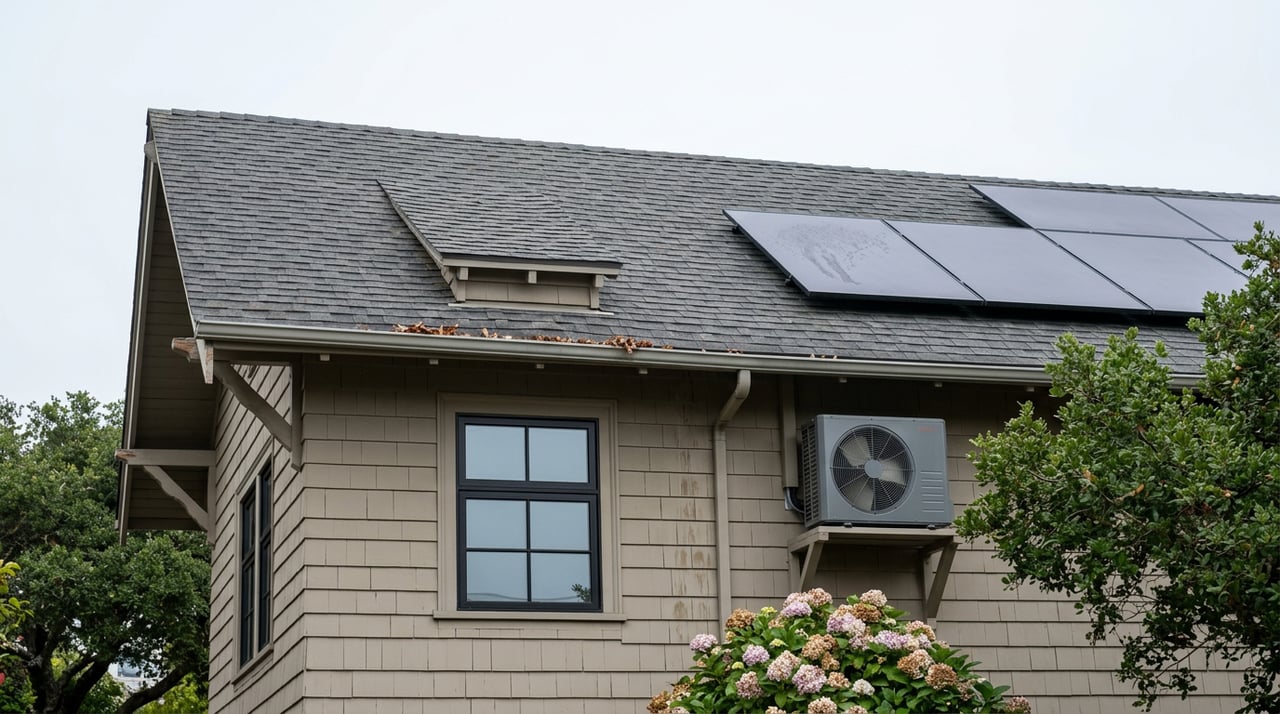
Berkeley's New Energy Ordinance Isn't Forcing Renovations. It's Changing How Offers Get Negotiated.
September 24, 2026
September 24, 2026
A Berkeley listing used to start with paint colors and staging schedules. Now it starts with a phone call to a Home Energy Score assessor, and the seller who waits until the week before photos are due is already behind.
As of January 1, 2026, anyone selling a single-family home or duplex in Berkeley has to get that assessment before the home goes on the market, not after an offer is accepted, not as a disclosure buried in escrow paperwork. This is the Building Emissions Saving Ordinance, known around town as BESO, and the version that took effect this year is a different animal than the one Berkeley has run since 2015. For a decade, BESO only asked sellers to disclose an energy report. Starting this year, it asks them to act on it, or pay someone else to.
Here's the part that hasn't gotten as much attention as the mandate itself: most sellers aren't installing anything. They're paying to make the problem go away, and that choice is quietly becoming a bigger factor in how Berkeley offers get structured than the ordinance's authors probably expected.
Before this year, a seller could defer the entire energy assessment to the buyer. That option is gone for single-family homes and duplexes. The seller now has to hire a Home Energy Score assessor from the city's registered list, get a score between 1 and 10 for the property, and post that score in the MLS listing before it goes live. Skip it, and the city charges a $500 non-compliance fee.
That score is only step one. The bigger requirement is what comes next: sellers of 1 to 2 unit properties need to reach six "resilience credits" through qualifying upgrades, or arrange for the buyer to do it after closing. Triplexes and fourplexes get a longer runway. Their compliance deadline isn't until January 2028, and until then they only need the assessment, not the upgrades. Buildings over 25,000 square feet follow an entirely separate track involving annual energy benchmarking.
The credit menu looks like this:
| Upgrade | Credits |
|---|---|
| Heat pump water heater | 6 (full compliance on its own) |
| Heat pump HVAC system | 6 (full compliance on its own) |
| Solar PV with battery storage | 3 |
| EV charger or induction range | 2 |
| Attic or wall insulation, duct sealing, window replacement | 1 to 2 (partial, can be combined) |
A seller who already installed a heat pump water heater in the past five years is done. No further work, just a $150 filing fee for the Certificate of Compliance. A seller with an aging gas furnace and no other upgrades has a real decision to make, and that decision has to happen on a timeline that doesn't always line up with a listing date.
The city started tracking outcomes almost immediately, and the early numbers tell a story that's more interesting than the ordinance's press release. As of a May 2026 report from the real estate trade publication Propmodo, Berkeley had logged 80 escrow deposits and 57 compliance certifications since the rule took effect in January. Of those, only nine applications came from sellers who installed a heat pump this year specifically to get ahead of a sale.
Read that again. Eighty households chose to defer. Nine chose to build.
That's the actual behavior pattern under this ordinance, and it makes sense once you look at the mechanics. Completing the upgrades before closing means finding a licensed contractor, getting a permit that references BESO compliance, waiting for the work, and hoping the timeline doesn't collide with a buyer's inspection period. Deferring means writing a check for $2,500 into a city escrow account, handing the buyer the other $2,500 obligation, and letting the paperwork close on schedule.
For a seller trying to get a home on the market in a normal window, especially with fall listing season already tight on contractor availability, the deposit route is often just faster. The upgrade route is cheaper in theory, since $2,500 rarely covers a full heat pump installation on its own, but it takes time most sellers don't have once a listing date is set.
The deposit isn't free money sitting in escrow. It's a countdown. Once a buyer accepts the deferral, they have two years to complete a qualifying upgrade and get the certificate. If they do, they get the full $5,000 refunded, not just their half. If they let the window lapse, the entire $5,000 is forfeited to a city fund for low-income emissions programs, and that includes the seller's original $2,500.
Run the math on a heat pump water heater. Installation in Alameda County typically runs somewhere in the $6,700 to $7,900 range before rebates, though a buyer who shops carefully or times it with current incentives can often land closer to $3,000 out of pocket after credits. Spend $3,000, file the paperwork, and the $5,000 deposit comes back in full. That's a $2,000 gain over the cost of the work, on top of a house that's now genuinely more efficient to run.
Do nothing for two years, and both parties lose their money to a fund neither of them controls.
That structure creates a real incentive to act, even for a buyer who couldn't care less about emissions targets. It also means the deferral isn't a way to make the issue disappear. It's a way to hand the timeline problem to someone with more runway, at the cost of $2,500 that doesn't come back unless the work gets done.
Berkeley didn't build this ordinance in isolation. The Bay Area Air District has a rule scheduled for 2027 that will ban the sale and installation of new gas water heaters and furnaces across the region, so BESO functions as an early bridge into a shift that's coming regardless. The city's original climate commitment goes back to Measure G in 2006, when voters backed an 80 percent reduction in greenhouse gas emissions from 2000 levels by 2050. BESO in its original disclosure-only form ran for nearly a decade with fewer than 3 percent of property owners voluntarily acting on the recommendations in their energy reports. That's most of why the city moved from disclosure to mandate this year.
None of that history changes what a seller needs to do this fall. What it does explain is why the rule isn't going away or softening. A home with a low Home Energy Score and an aging gas system isn't just an efficiency question anymore. It's a line item that shows up in how buyers read an offer, whether the seller has already handled it, banked the credits from a past renovation, or is walking into escrow with a $2,500 decision still unresolved.
For a seller who's already planning updates before listing, the smart move is folding BESO into that plan rather than treating it as a separate errand. A permitted upgrade completed any time in the five years before a sale still counts toward the six credits, which means a kitchen remodel that included an induction range, or a panel upgrade done for an EV charger, may already have the seller most of the way to compliance without anyone realizing it. Checking that before listing day arrives is worth ten minutes with the city's BESO portal and can save a much more complicated conversation once an offer is on the table.
Does BESO apply to condos? No. The current requirements exclude condominiums and accessory dwelling units. They apply to single-family homes and duplexes now, with triplexes and fourplexes phasing in by January 2028.
Can a seller get an exemption? Yes, in specific cases. Homes that are already fully electric with no gas service qualify for a heat pump exemption. Certain court-ordered sales, such as probate transfers, and buyers enrolled in an approved income-qualified first-time homebuyer program can also qualify, though the city requires verification before the sale closes.
What happens if the score expires before a future sale? Home Energy Scores are valid for five years. If a seller's assessment is still current from a prior sale or a voluntary check, it can be reused without repeating the process, as long as the five-year window hasn't closed.
Preparing a Berkeley home for market has always meant more than paint and staging, and this is one more piece of that groundwork worth getting right before the sign goes in the yard. If you're weighing whether to handle BESO compliance yourself or negotiate it into the sale, Salt & Pine Real Estate can walk through the timeline with you and help you decide which path actually gets your home to closing faster. Get Your Home Value to start that conversation.
Stay up to date on the latest real estate trends.



Let us guide you through every step of your real estate journey.